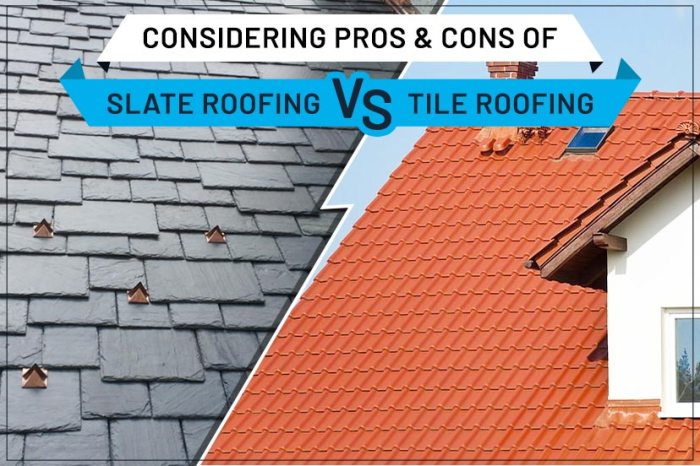
Diving into the world of slate roofing pros and cons, we uncover the benefits and drawbacks of this timeless roofing material. From its durability to aesthetic appeal, this overview will shed light on all aspects of slate roofing.
As we delve deeper, we will uncover the intricacies of slate roofing that make it a popular choice for homeowners looking for longevity and style in their roofs.
Pros of Slate Roofing
Slate roofing offers numerous advantages that make it a popular choice for homeowners looking for a long-lasting and visually appealing roofing option.
Durability of Slate Roofing
Slate roofs are known for their exceptional durability, with some lasting over 100 years when properly maintained. This longevity makes slate a cost-effective option in the long run, as it requires fewer replacements compared to other roofing materials.
Aesthetic Appeal of Slate Roofs
One of the key benefits of slate roofing is its timeless beauty and elegant appearance. The natural stone comes in a variety of colors and textures, adding a touch of sophistication to any home. Additionally, the unique look of slate can increase the curb appeal and overall value of a property.
Environmentally Friendly Aspects of Using Slate
Slate is a natural material that is sustainably sourced and requires minimal processing during production, making it an eco-friendly roofing option. Additionally, the long lifespan of slate roofs means less waste generated over time compared to other roofing materials that need frequent replacements.
Lifespan of Slate Roofs Compared to Other Materials
When properly installed and maintained, slate roofs have a much longer lifespan compared to traditional asphalt shingles or wooden shakes. While the initial cost of slate roofing may be higher, the longevity of the material ultimately leads to cost savings over the lifetime of the roof.
Cons of Slate Roofing
While slate roofing has many benefits, there are also some drawbacks to consider before choosing this option for your home.
Weight of Slate Roofs
One of the main disadvantages of slate roofing is its weight. Slate is a heavy material, and this can put a significant amount of stress on the structure of your home. It may require additional reinforcement to support the weight of the slate tiles, which can increase the overall cost of installation.
Cost Considerations
Another downside of slate roofing is the cost. Slate is a premium roofing material, and it tends to be more expensive than other options like asphalt shingles or metal roofing. The initial cost of installing a slate roof can be quite high, making it a less budget-friendly choice for some homeowners.
Maintenance Challenges
Slate roofs require regular maintenance to ensure their longevity. While slate is a durable material, it can still crack or break over time. Repairing or replacing damaged slate tiles can be labor-intensive and costly. Additionally, finding a contractor with experience working with slate roofing can be challenging, which can further add to the maintenance difficulties.
Limited Color Options
Unlike other roofing materials that offer a wide range of color choices, slate roofing has limited options when it comes to colors. Slate naturally comes in shades of gray, black, and green, which may not suit every homeowner's aesthetic preferences.
If you are looking for a more vibrant or customized roof color, slate may not be the best choice for you.
Installation Process
When it comes to installing a slate roof, there are specific steps involved to ensure a successful and long-lasting outcome. Finding skilled professionals, using the right tools and materials, and understanding the time frame are all essential aspects of the installation process.
Steps Involved in Installing a Slate Roof
- Preparing the roof deck by ensuring it is clean, dry, and free of any debris.
- Installing the underlayment to provide additional protection against water infiltration.
- Measuring and cutting the slate tiles to fit the roof's dimensions accurately.
- Securing the slate tiles in place using nails or hooks, ensuring they overlap correctly for proper water drainage.
- Adding finishing touches such as ridge caps and flashings to complete the installation.
Tips for Finding Skilled Professionals for Slate Roof Installation
- Research and ask for recommendations from friends, family, or local roofing suppliers.
- Check the contractor's credentials, experience, and reviews before making a decision.
- Request a detailed estimate and timeline for the project to ensure transparency and clear communication.
- Verify the contractor's insurance and licensing to protect yourself from any liability.
Tools and Materials Required for Installing a Slate Roof
- Slate tiles in the desired color and size.
- Underlayment material such as roofing felt or synthetic membranes.
- Nails or hooks for securing the slate tiles.
- Roofing hammer, slate cutter, and other specialized tools for cutting and installing the tiles.
- Ridge caps, flashings, and other accessories for a finished look.
Time Frame for Slate Roof Installation
Installing a slate roof is a meticulous process that can take longer than other roofing materials. On average, the installation of a slate roof can take anywhere from a few weeks to a few months, depending on the size of the roof, the complexity of the design, and the availability of skilled labor.
It is essential to factor in this timeframe when planning for a slate roof installation to ensure a smooth and timely completion.
Maintenance and Repairs
When it comes to maintaining and repairing a slate roof, there are specific routines and considerations to keep in mind to ensure the longevity and durability of the roof.
Recommended Maintenance Routine
- Regular inspection of the roof to check for any cracked, loose, or missing slates.
- Clearing debris such as leaves, branches, and other materials that can accumulate on the roof.
- Checking and cleaning the gutters to prevent water backup and potential damage to the roof.
- Trimming overhanging branches that can cause damage to the slate roof.
- Applying a biocide treatment to prevent the growth of moss and algae on the slate surface.
Common Issues Requiring Repairs
- Cracked or broken slates that need to be replaced promptly to prevent water leakage.
- Loose or missing slates that compromise the integrity of the roof and need to be secured or replaced.
- Leaks and water damage caused by damaged or deteriorating slates.
- Flashing issues around chimneys, vents, and skylights that may require repair to prevent water infiltration.
Finding Qualified Contractors
- Seek recommendations from friends, family, or neighbors who have had their slate roofs repaired.
- Look for contractors with experience in working with slate roofs and a good reputation in the industry.
- Verify licenses, insurance, and certifications of potential contractors before hiring them for repairs.
- Get multiple quotes and compare services offered by different contractors to make an informed decision.
Costs of Maintenance and Repairs
Maintenance costs for a slate roof can vary depending on the size of the roof, the extent of repairs needed, and the contractor hired. On average, homeowners can expect to pay between $500 to $1500 annually for maintenance and repairs of a slate roof.
However, these costs can increase significantly if major repairs or replacements are required.
Outcome Summary
In conclusion, slate roofing offers a blend of durability and charm, but it's important to weigh the pros and cons carefully before making a decision. Whether you're captivated by its elegance or concerned about maintenance, understanding all facets of slate roofing is key to making an informed choice for your home.
Commonly Asked Questions
How long does a slate roof typically last?
A well-maintained slate roof can last over 100 years, outlasting most other roofing materials.
Are there any color options available with slate roofing?
Slate roofs typically come in shades of gray, black, green, and red, limiting the color options compared to other roofing materials.
What are the maintenance challenges associated with slate roofing?
Slate roofs require regular inspections to address cracked or missing tiles, as well as ensuring proper drainage to prevent water damage.